Designing for Humans: A Conversation on AI, Creativity, and Keeping People at the Center
The importance of keeping human connections centered in our online expereince.
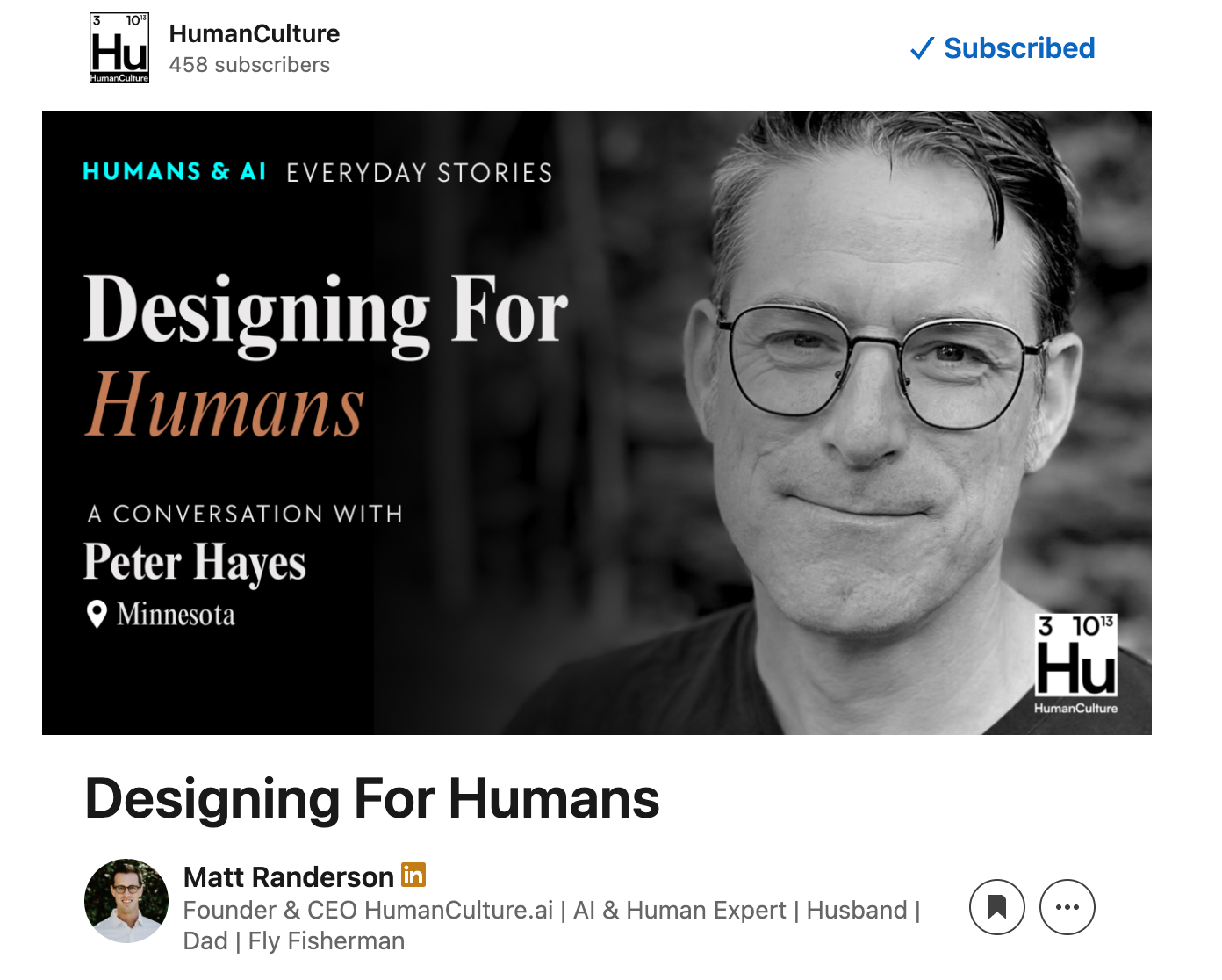
I recently had the pleasure of sitting down with Matt Randerson from HumanCulture.ai for a wide-ranging conversation about design, human connection, and how our work is evolving in the age of AI.
This interview was personally a great opportunity to reflect on why I do what I do, and it stood out for a specific reason: Matt’s approach to the conversation itself. Rather than running through a checklist of standard questions, Matt brought incredible intentionality to the discussion. He asked thoughtful questions, listened deeply, and took the time to synthesize our dialogue into a truly coherent and nuanced narrative. In a world that often values speed over substance, his thoughtful editorial process was a refreshing reminder of what high-quality human collaboration looks like.
During our conversation, we touched on my background in photography and art history, tracing how those early disciplines shaped the way I see and approach strategy at Workroom Creative. But the heart of our discussion kept returning to one fundamental question: Who are you designing for?
In a landscape where AI tools allow teams to generate, iterate, and publish at unprecedented speed, it’s remarkably easy to get caught up in the efficiency of it all. Speed is powerful, but output alone isn't the goal.
If accelerated production loses the subtle, human element on the receiving end, then the nuance, empathy, and resonance that make work actually land with a real person, the work ultimately fails.
At Workroom Creative, we’ve always believed that technology should serve human intent, not replace it. Embracing AI doesn't mean sacrificing depth; it means being even more deliberate about keeping humans at the center of every creative and strategic choice we make.
A huge thanks to Matt Randerson for a truly inspiring dialogue and for capturing the core of that philosophy so thoughtfully in his article.
You can read the full feature here: Designing For Humans by Matt Randerson